what is ecology and why is it important to study
The Importance of Studying Ecology
Sonali Mohanty*
Section of Microbiology, Utkal University, Bhubaneswar, Odisha, India
- *Corresponding Author:
- Sonali Mohanty
Section of Microbiology
Utkal University, Bhubaneswar
Odisha, Republic of india
Tel: +918895254948
Electronic mail: [email protected]
Received date: xv/02/2017; Accepted date: 15/04/2017; Published date: 22/04/2017
Visit for more related manufactures at Research & Reviews: Journal of Environmental and Environmental Sciences
Abstract
Ecology is the scientific report of interaction between organisms and their environment. It includes both biotic and abiotic factors. The level of system of environmental is in such a mode i.e., species, population, community, ecosystem, biome, biosphere. Biomes are the environments that take characteristics of not changing also much over time. There are few biomes in the world similar: Aquatic (rivers, streams, lakes, open sea zone, deep sea zone, neritic zone) and Terrestrial (tundra, taiga, grass land, tropical rainforest, and desert). The 3 basic approaches that conduct the ecological methods are observing, experimenting and modelling. The free energy that comes to the globe comes from sunday that means sun is the source of energy for the ecosystem. The feeding relationship in ecosystem is food concatenation and food web. To maintain the ecosystem many biochemical cycles are going on like water, carbon, nitrogen, and phosphorus and limited nutrients. At that place are various studies related to environmental like bioecology i.e., the written report of ecology of both plants and animals whereas the report of communities is synecology and the study of species is known as autecology. The increase in human population demands for the development and use the natural resources highly present in surround.
Keywords
Ecosystem, Environment, Biotic, Biosphere, Species
Introduction
The science which deals with the study of the biota, their surround and interactions is known as Environmental. Ecology derived from the Greek word Oikos significant habitation, and logos meaning report, i.e., study of the habitations of organisms (Figure one). This is the study of ecosystem, which draw the relation betwixt the organisms with unlike habitats [ane].The environs of an organism includes both biotic and abiotic factors. These two factors have to coordinate each other to share the resource that are present within the environmental ecosystem [2]. To understand about this common human relationship we have to study environmental. Homo is likewise the part of ecosystem.
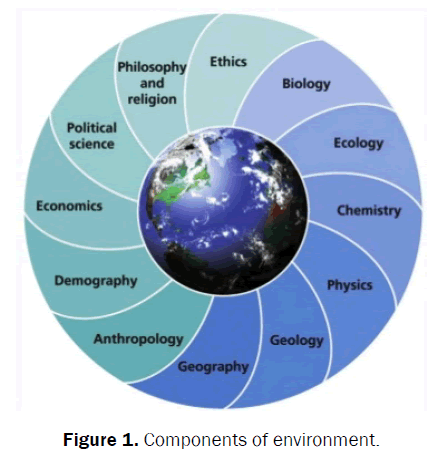
Figure one: Components of environs.
Types of Environmental
The ecological studies are all about connections of all life forms in globe and their various types of environmental (Figure ii).
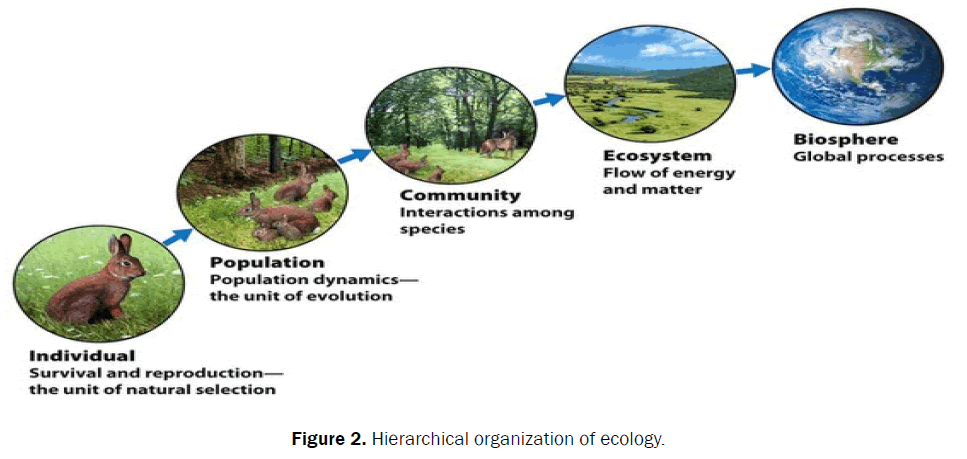
Effigy 2: Hierarchical organization of ecology.
Organism Ecology
This is the study of organism respond to stimuli caused by physical environment. The organisms adapt the environment either happily or ignoring away from its effect. A concrete change in environment volition show the change in behaviour or physical attributes.
Population Ecology
The natural process is that, all organisms will grow and dice. The factors past which they will populate are the size of colony, birth and death rate, population growth rate [iii].
Community Ecology
The association of populations of two or more different species occupying the same geographical area. Competition, mutualisms are fundamental interactions to maintaining a community [4].
Ecosystem Ecology
This is the community of living organisms along with non-living surroundings like air, water, soil.
Landscape Ecology
The exchange of energy, materials, organisms and other products between the ecosystems is known as landscape ecology.
Global Ecology
The result of change in energy and matter exchange on the function and distribution of organism in environs [5].
Types of Environs
The term surroundings describes the sum full of physical, chemic and biotic conditions surrounding and influencing the living organisms (Figure 3). Environment is classified into 3 types [6].
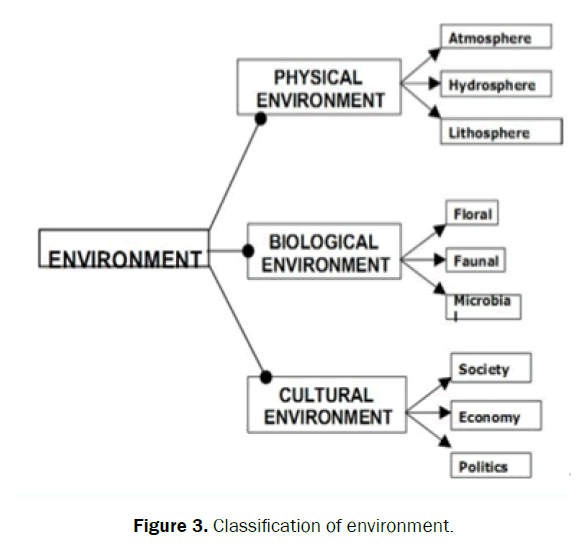
Figure 3: Classification of environment.
Biotic (Biological)
Biotic elements refer to the biological component of the ecosystem, having the population of plants, animals and microorganisms. The biotic component of the ecosystem consists of iii groups of organism, the producers, consumers and decomposers. The producers are the organisms those are capable for photosynthesis (plants). The consumers depend on the producers (all herbivores).The decomposers are the organisms that are rely on dead organisms for their being (bacteria, virus, and yeast).
Abiotic (Physical)
It includes the flow of energy necessary to maintain any organism, the physical factor(climate, temperature, rain, snow, hills) that affects it and the supply of molecules required for its life functions(carbon, hydrogen, nitrogen, sulphur, phosphorus
Cultural
The interaction between human and environment also influence the ecosystem. Background of dissimilar cultures put different values on natural world.
Importance of Studying Ecology
Environmental Conversation
By studying environmental, the emphasis is put on how every organism needs other for peaceful coexistence. Having no ideas on ecology will responsible for degradation of land and environment, which is the living place of other species leading to their destruction [7-9].
Resource Allocation
All plants and animals accept roles in the environment every bit they sharing express natural resource such as air, minerals, space. Lack of ecological studies may exist the crusade of impecuniousness and looting of these natural resource.
Energy Conservation
The entire living organism needs energy such as nutrition, light, radiation etc. So lack of ecological studies volition be the crusade for destruction of the energy resources. Oil, coal, and natural gases are the non-renewable sources which will destruct the ozone layer.
Eco-friendliness
It helps to capeesh living amidst the organisms; this volition follow natural order of things.
Discussion
Ecology is the key word in the world every bit the world tries to mitigate the destruction that is already rife in the ecosystem. Equally ecology is the interactions between organisms and their habitat and we are all the part of ecosystem, we accept written report nigh the ecology that we tin can avoid our actions having unintended consequence [x]. If nosotros want to conserve and protect nature and forbid the extinction of species, we need to know how they all fit together, what their habitat requirements are, how they influence each other, what the minimum population sizes are to ensure their survival, etc. For survival of species, natural areas, equally well equally agricultural sustainability, environmental is important. Without a adept knowledge of environmental, the report of other fields will be useless and the human species will extinct.
Conclusion
Nature and surround are commonly used terms for the ecology. Man is seen as a sort of geological force reshaping mural, favouring some kinds of organisms and destroying others, changing the very composition of the atmosphere and starting new concatenation of radio activeness with atomic explosions.
References
- Eric Laferriere, et al. International relations theory and ecological thought: Towards a synthesis. Psychology Press, Uk; 1999.
- Levin, et al. Ecosystems and the biosphere as complex adaptive systems. Ecosystems. 1998;1:431-436.
- Friederichs K, et al, A definition of environmental and some thoughts about bones concepts. Ecology. 1958;39:154–159.
- Stadler B, et al. Linking aphid environmental with nutrient fluxes in a coniferous forest. Ecology.1998;79:1514-1525.
- Brinson MM, et al. Principal productivity, decomposition and consumer activity in freshwater wetlands. Annual Review of Ecology and Systematics.1981;12:123-161.
- https://simple.wikipedia.org/wiki/Ecology
- https://en.wikipedia.org/wiki/Outline_of_ecology
- http://eco-globe.com/why-it-is-important-to-study-ecology/
- http://world wide web.bio.miami.edu/ecosummer/lectures/lec03_climate.pdf
- http://archive.mu.air-conditioning.in/myweb_test/Grand.A.Part%20-%20II%20-%20Paper%20VII.pdf
Source: https://www.rroij.com/open-access/the-importance-of-studying-ecology-.php?aid=86117
0 Response to "what is ecology and why is it important to study"
Post a Comment